

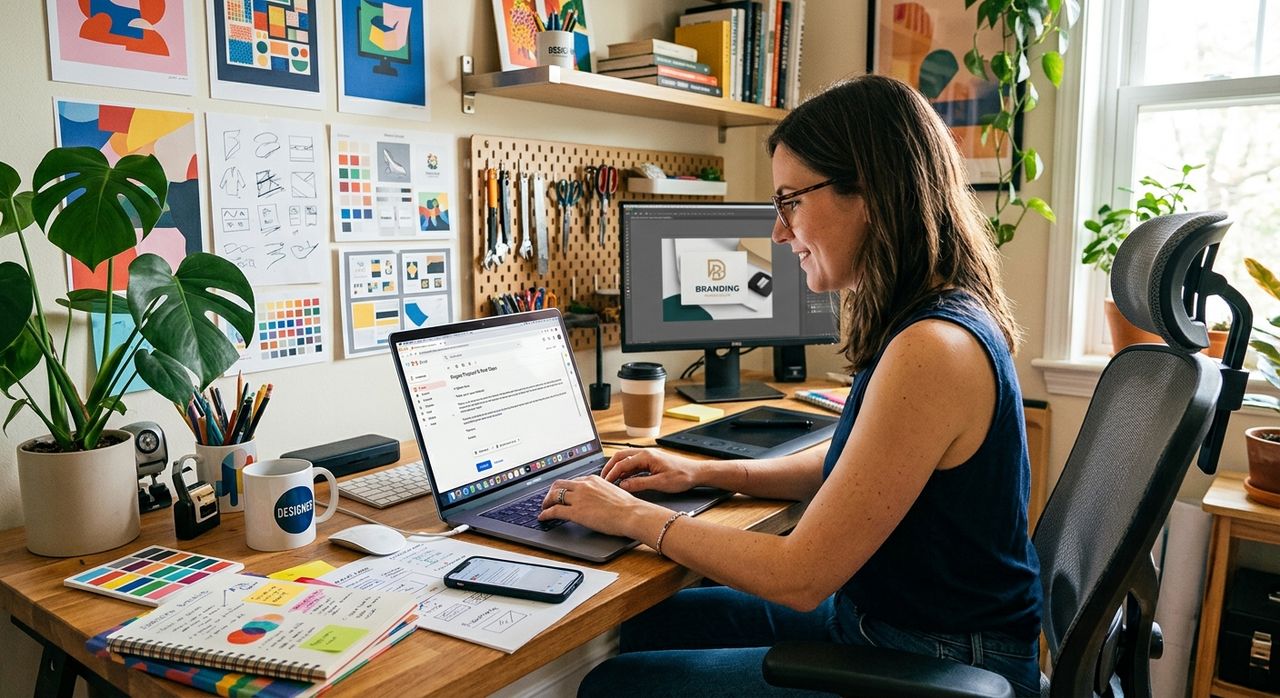
Most freelance graphic designers spend years sharpening their visual craft, then lose a client over a badly worded email. Not a bad logo. Not a missed deadline. An email that felt off, too casual, too cold, or just plain confusing. Your inbox is as much a part of your portfolio as your Behance page. Every message you send shapes how clients see you before they ever look at your work.
Key Takeaways:
- Email tone, whether too breezy or too stiff, can cost you a client before the project even begins
- Pitch emails and revision requests carry the highest risk of tone mismatch
- Running your draft through a tone checker before sending catches problems a re-read will miss
- Cold outreach to studios lives or dies by the subject line, and testing your opener matters
- Treating your email communication as part of your professional brand pays off over time
The Gap Between Design Skills and Writing Skills
Design school covers typography, color theory, and composition. It rarely covers professional writing. That gap catches a lot of freelancers off guard, especially early in their careers, when they're juggling a client call, a tight deadline, and an inbox full of follow-ups.
Business communication has its own conventions, and email sits right at the center of them. A message that reads as friendly to you might read as flippant to a senior art director. A message you meant to sound professional might land as cold or standoffish. Neither impression helps you win work.
The problem is not a lack of writing ability. Most designers write fine. The problem is context. You are writing to clients who may be stressed, skeptical, or stretched thin, and the tone you choose either builds trust or erodes it. There is no neutral setting.
Why Tone Gets Designers in Trouble
There are two failure modes that come up again and again in freelance client emails.
The first is being too casual. This happens most often with designers who have warm, friendly personalities and bring that energy straight into their writing. Short sentences, abbreviations, maybe an emoji or two. That works well in some contexts, but it can read as unprofessional to a client who is deciding whether to hand over a significant project budget. They want to feel like they're working with someone reliable, not just someone fun.
The second is being too stiff. This is equally common, especially when designers are trying to sound professional. They reach for formal language, passive constructions, and long winding sentences. The result is a message that sounds like it was written by a legal department rather than a creative collaborator. Clients who work in branding, marketing, or media often find this kind of email off-putting, even if they can't quite put a finger on why.
Both failure modes cost you trust, and trust is the currency that freelance careers run on.
The Emails That Carry the Highest Risk
Not every email carries the same weight. A simple confirmation message is low stakes. But certain types of emails are high-stakes enough that getting the tone wrong can directly affect the project or the relationship.
- The initial pitch email introduces you to a new client. It sets the tone for everything that follows. If it reads as too eager, clients worry you will be difficult to manage. If it reads as dismissive, they may not bother replying.
- The revision request response is where many designer-client relationships get strained. You need to acknowledge the client's feedback, hold your own professional judgment, and avoid sounding defensive. Threading that needle in writing is harder than it sounds.
- The pricing or scope-change email requires confidence and clarity. If the tone wavers, the client senses uncertainty and may push back harder on the numbers.
- The follow-up after no reply needs to be persistent without being annoying. Too apologetic and you lose credibility. Too demanding and you lose the client entirely.
Getting any one of these wrong can set a project back, or end a client relationship that might have become long-term recurring work.
Gut-Checking Your Draft Before You Hit Send
Before sending any high-stakes email, read it aloud. If you stumble over a sentence, the client will too. If it sounds like someone you would not want to work with, rewrite it.
But reading aloud only catches so much. A tone checker gives you a second opinion on whether your message reads the way you intend it to. You paste in your draft, and it flags areas where the tone shifts, where language comes across as overly aggressive, or where you have accidentally tipped into passive-aggressive territory without meaning to.
For revision requests in particular, this kind of check is useful because those emails are often written when you are frustrated. A client has come back with feedback that seems to miss the point of the design entirely. You write a response. You think it sounds measured. A tone analysis will often reveal that it actually reads as defensive or clipped. Catching that before you send saves you from a much harder conversation later.
The same applies to pitch emails. You want to sound confident but not arrogant. Friendly but not sycophantic. Interested but not desperate. That is a narrow band to hit consistently, and an outside read, even a digital one, helps you land in it more reliably than a solo review.
Cold Outreach to New Studios: A Different Game
Pitching an existing client on a new project is one thing. Cold outreach to a studio you have never worked with is another challenge entirely.
Graphic design studios receive a steady stream of unsolicited emails from freelancers. Creative directors are time-poor, and they make fast decisions about which messages to open and which to delete. Your email body might be perfectly written, but if nobody opens it, none of that work matters.
This is why the subject line deserves its own attention. In cold outreach, it does the heaviest lifting. A subject line that sounds generic gets ignored. One that sounds overly salesy gets deleted. You need something that feels specific, relevant, and low-pressure enough that a busy creative director actually wants to find out what you are offering.
A subject line tool lets you test different angles and see which framing is more likely to earn a reply. For cold outreach to design studios specifically, subject lines that reference the studio's recent work or a particular type of project they are known for tend to outperform generic ones like "Freelance designer available" or "Partnership opportunity." The tool moves you away from those tired formulas toward openers that feel considered rather than copy-pasted.
One other point about cold outreach: keep the body short. Studios do not want to read three paragraphs about your background. They want to know in two or three sentences who you are, what you do, and why you are reaching out to them in particular. The subject line gets the email opened. The brevity gets it read.
Building an Email Style That Reflects Your Brand
Your email style, like your design style, is something you develop over time. The goal is to land in a register that feels authentically like you, is easy for clients to work with, and holds up across different types of conversations.
A few habits help freelance designers develop that style. Reading back through your sent folder occasionally, noticing which emails got good responses and which got no response or a lukewarm one. Paying attention to whether your tone shifts between client types, and whether those shifts are serving you. Writing a few template drafts for your highest-frequency email types, not to use verbatim, but to have a starting point that you know sounds like you at your best.
These habits compound. After a year of paying attention to how you write, your emails become one of the things clients notice and appreciate, even if they cannot articulate exactly why. They just know that working with you is smooth and clear, and that is precisely the reputation you want to build.
What Your Inbox Says About You as a Professional
A strong visual portfolio opens doors. Strong emails keep them open.
Tone mismatches cost real work. A pitch email that reads as too casual loses you the client before they have even looked at your portfolio. A revision response that reads as defensive turns a small disagreement into a strained relationship. A cold email with a forgettable subject line never gets opened at all.
The good news is that email is a skill, and skills improve with practice and the right support. Paying attention to how your messages land, testing your subject lines, checking your tone before you send, these are the kinds of adjustments that make a measurable difference over time. Your design work gets you in the room. Your emails determine whether you get to stay.